Xia Jingfu
He works Miao external applications and surface needling — methods grown in the mountains of Guizhou, carried by families and by the province's own Miao-medicine hospital.
Areas of practice
Huangguoshu, Guizhou · 贵州黄果树
Six nights inside the Huangguoshu scenic area, at a Bolian resort built around twenty-six garden hot-spring pools — a scenic walk every day, a resident practitioner of Miao medicine, and a table set by the mountains of Guizhou.
The setting
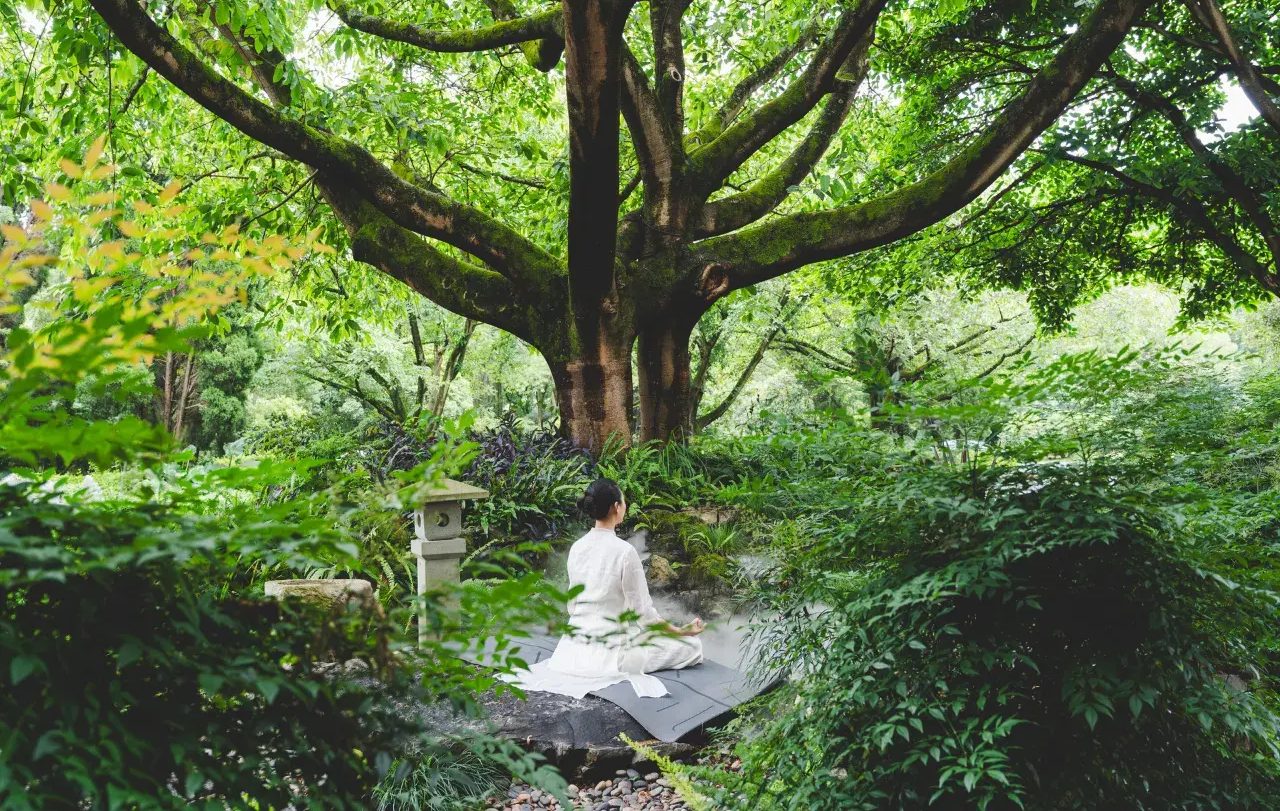
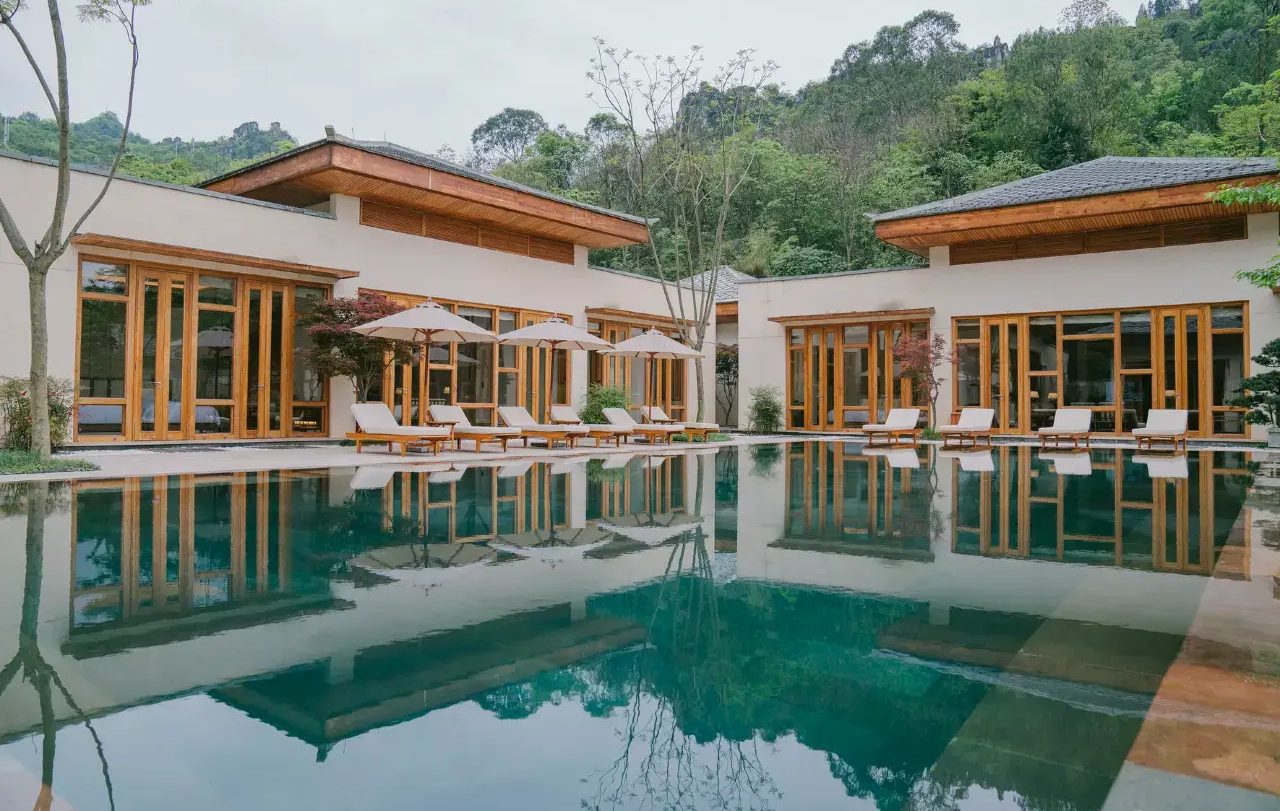
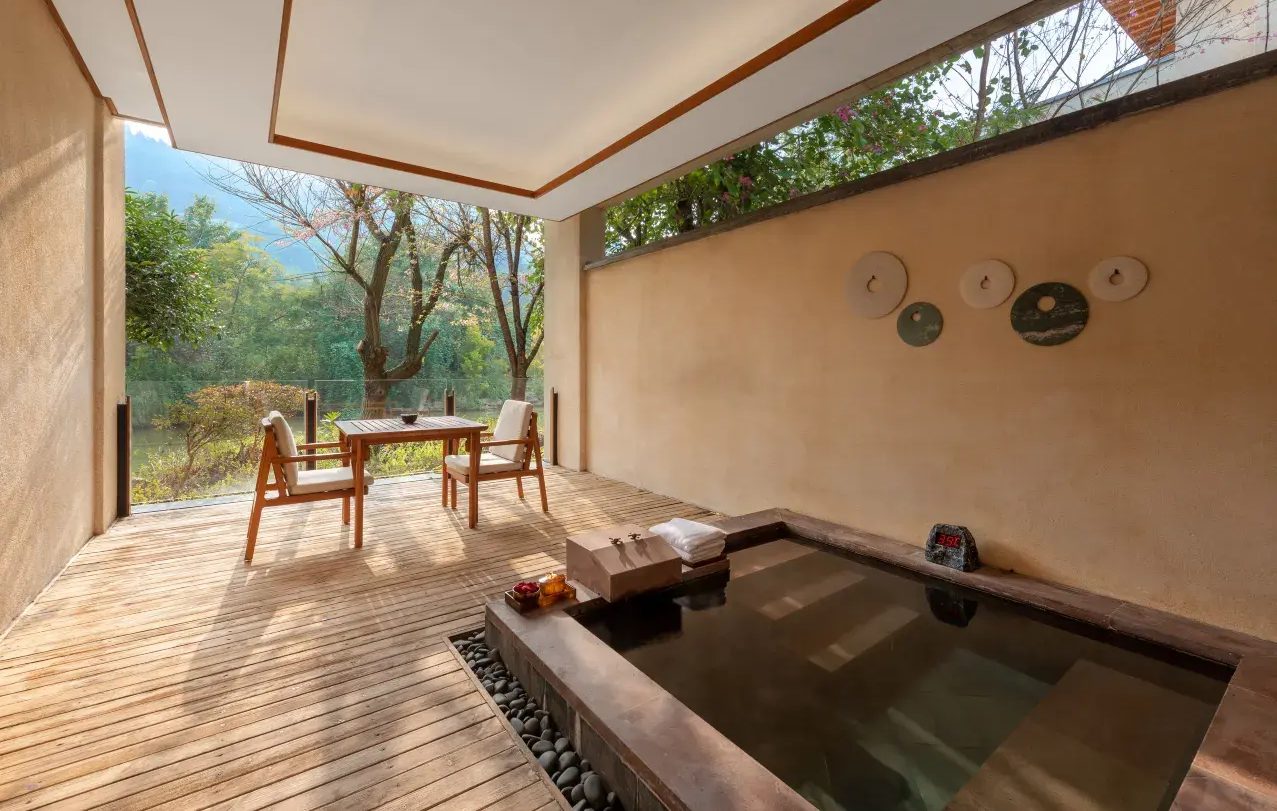
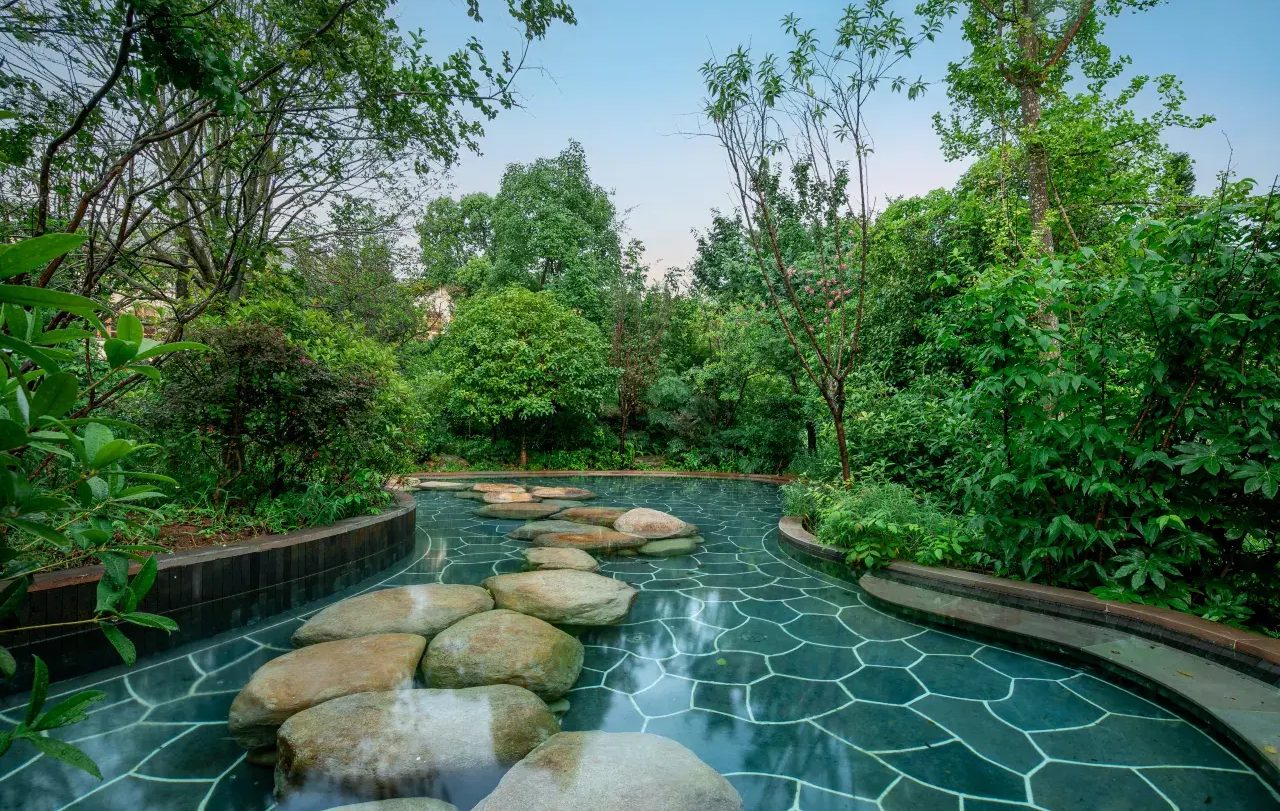
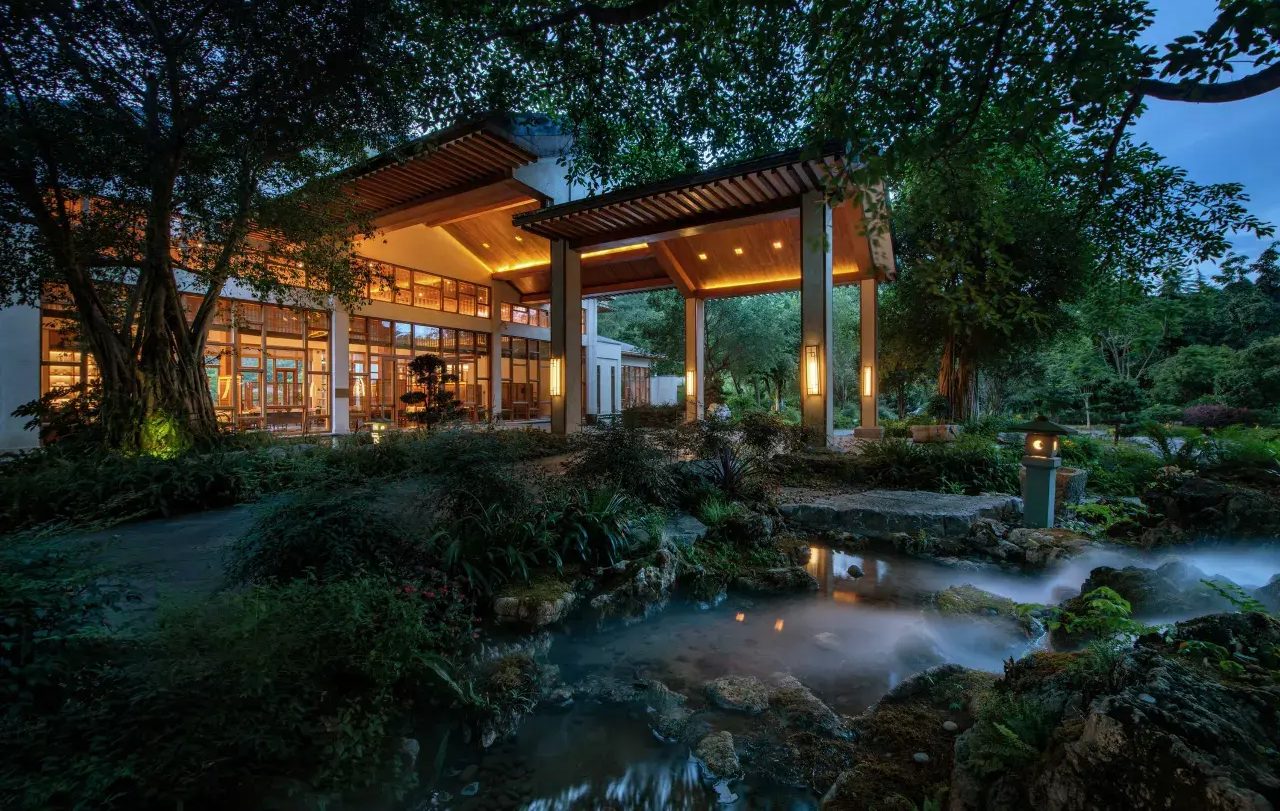
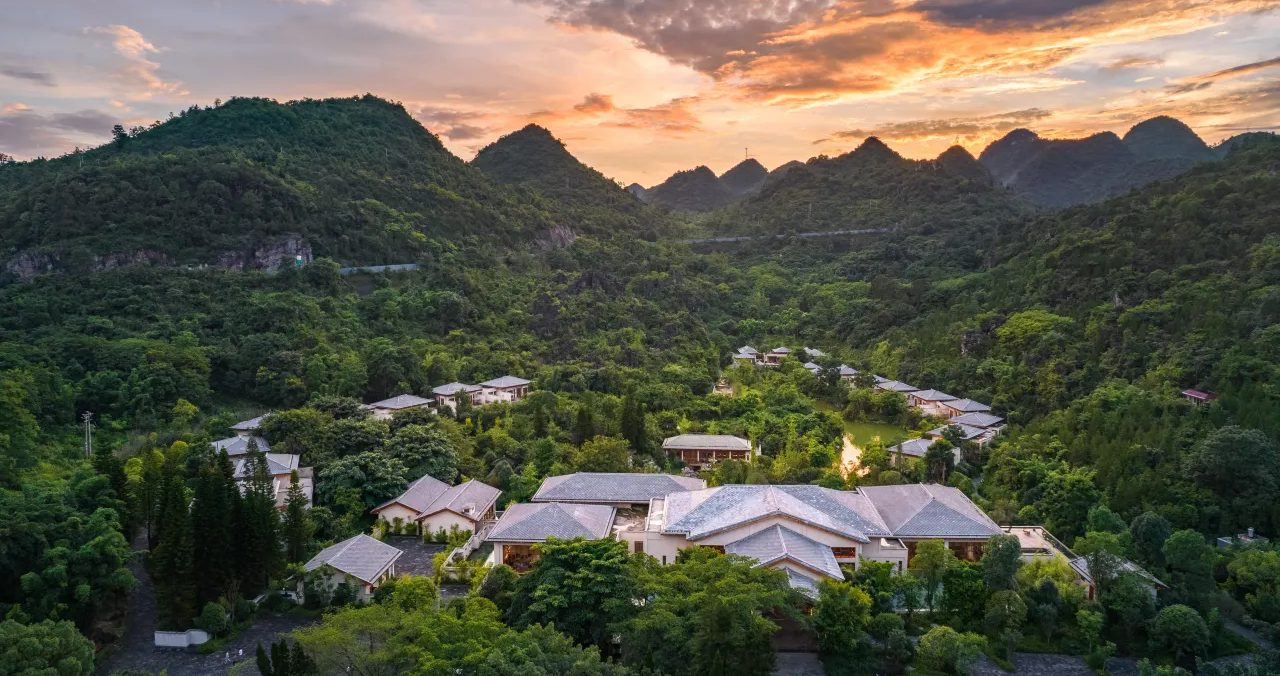
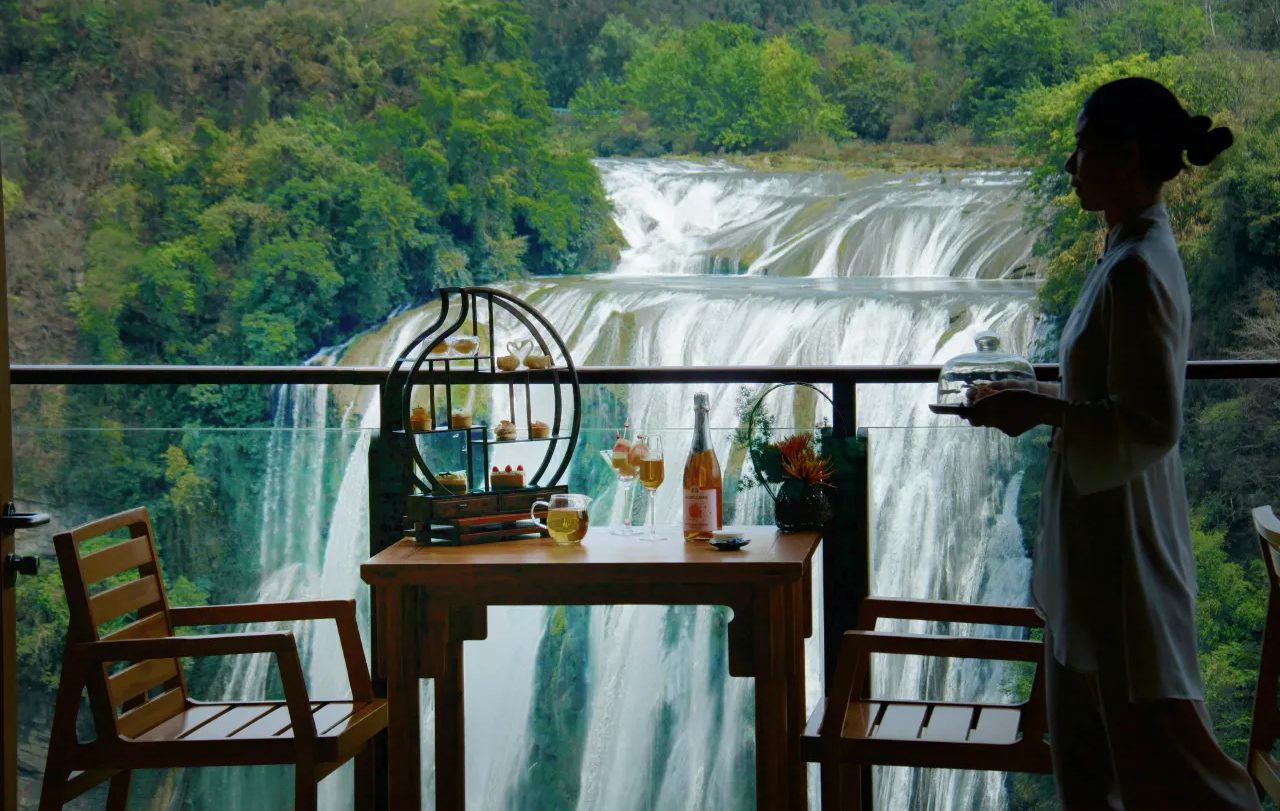
Bolian built its fifth retreat here, on the north side of the Huangguoshu scenic area: seventeen buildings, sixty-five rooms, and twenty-six spring pools set out in four courts — aromatic, forest, restorative and view. Every room has its own terrace pool. The great waterfall is a short walk, and the rush of it is the soundtrack to the morning practice.
Each day pairs one scenic excursion with one wellness session: the waterfall and Water-Curtain Cave, Tianxingqiao's stone forest, the Dragon Palace cave river, the Ming-era Tunbao villages, the Buyi wax-resist workshops of Shitouzhai. Between them, a resident practitioner of Miao medicine reads pulses, writes plans and walks the garden with you.
Your 7 days here
D1 · Arrival
We’ll meet you in Guiyang or at Anshun West Station and take you to the resort in the Huangguoshu scenic area. In the evening, the resident practitioner will take your pulse and assess your constitution. A welcome dinner featuring local Guizhou dishes follows.
D2 · Waterfall
Start the morning with Baduanjin and a brief check-in with the resident practitioner. Visit Huangguoshu Waterfall, including the Water-Curtain Cave and the viewing terraces. The afternoon is free for a soak at the resort.
D3 · Stone forest
Take an unhurried walk past the rock formations and streams. In the afternoon, meet with the resident practitioner. Herbal dishes are prepared according to your day-one wellness plan.
D4 · Mid-week
We’ll review your wellness plan based on how you’ve been sleeping and how you’ve felt on the walks. Visit Doupotang at an easy pace, then spend the afternoon learning about Buyi wax-resist dyeing in Shitouzhai.
D5 · Cave river
Take a boat along the underground river at Longgong. Back at the resort, there’s time for the week’s longest planned soak, followed by a quiet evening in the garden.
D6 · Tunbao
Walk through the stone lanes of Tianlong Tunbao. At the afternoon session, you’ll receive a bilingual handbook. Your practitioner will walk you through which wellness practices from the trip to continue at home over the next month and which to leave out.
Day 7 · Departure
After breakfast, we’ll arrange your departure transfer. We’ll follow up by email for 30 days after the trip.
A look around
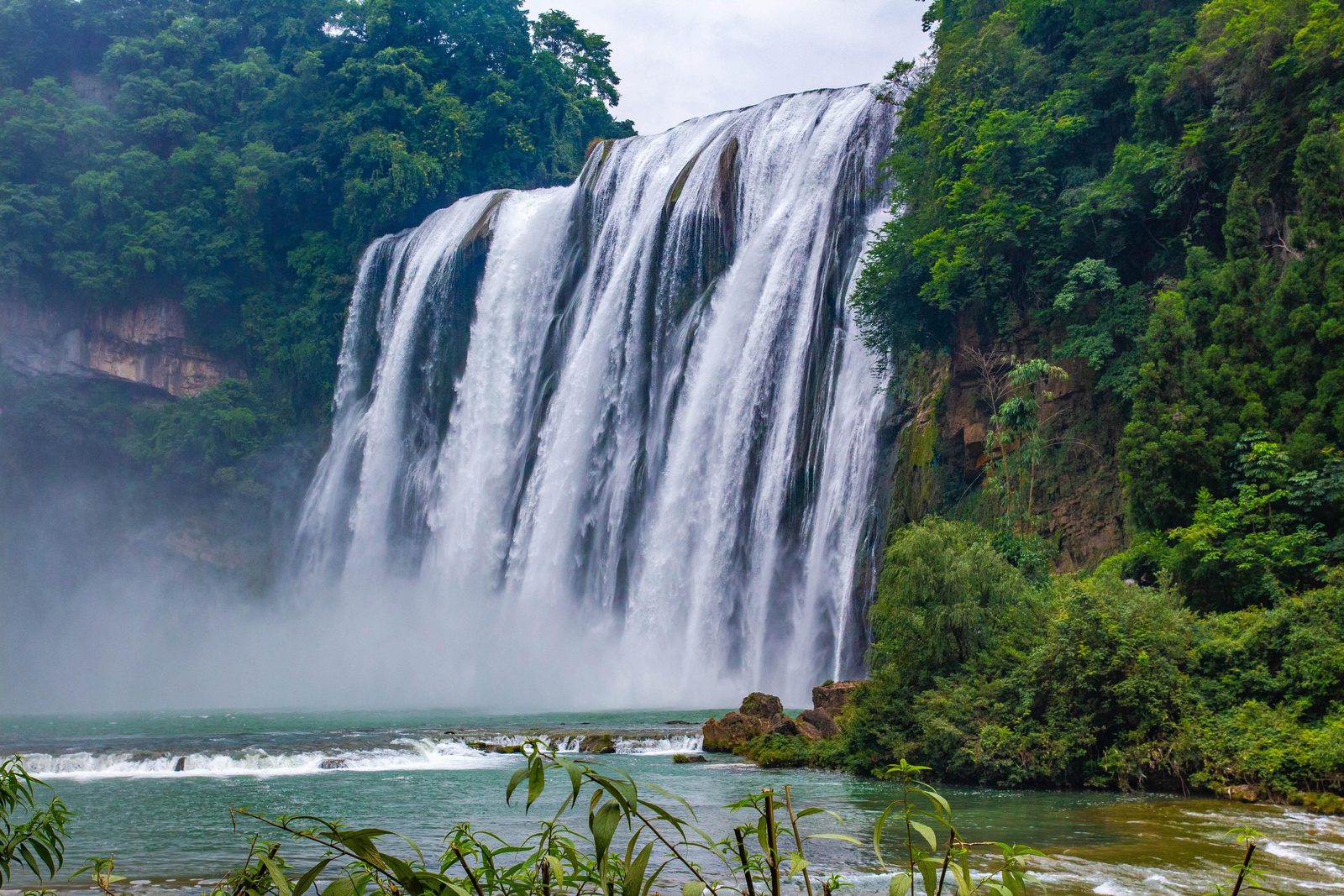
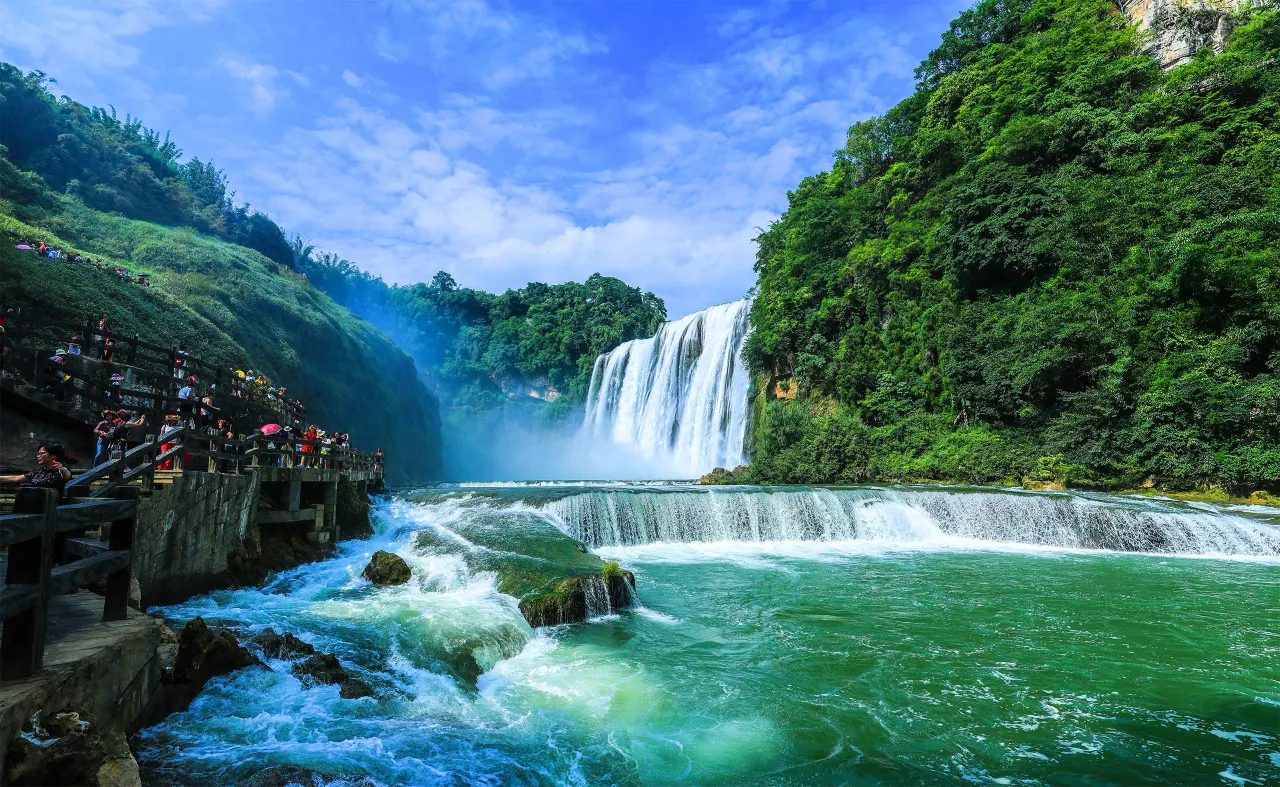
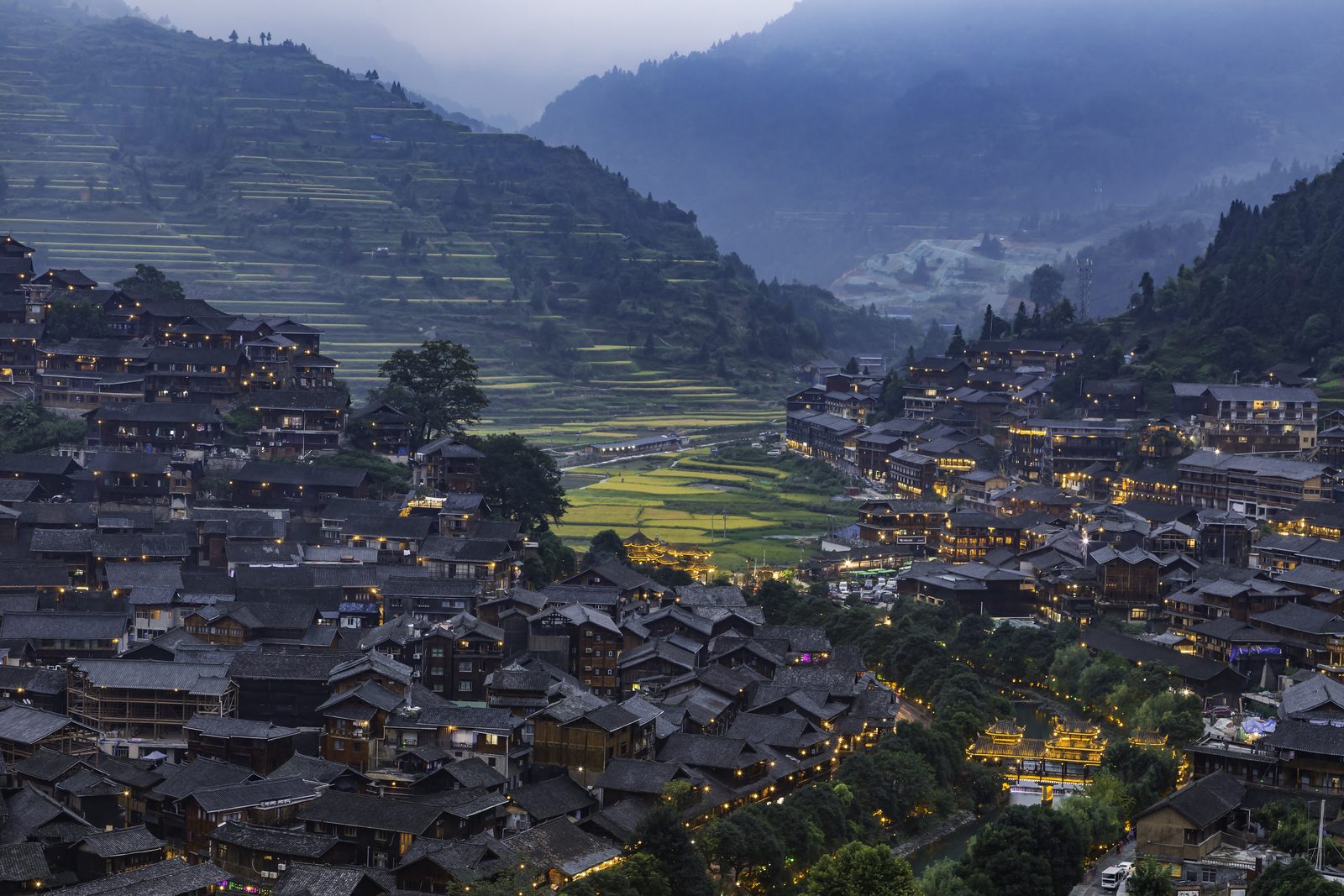
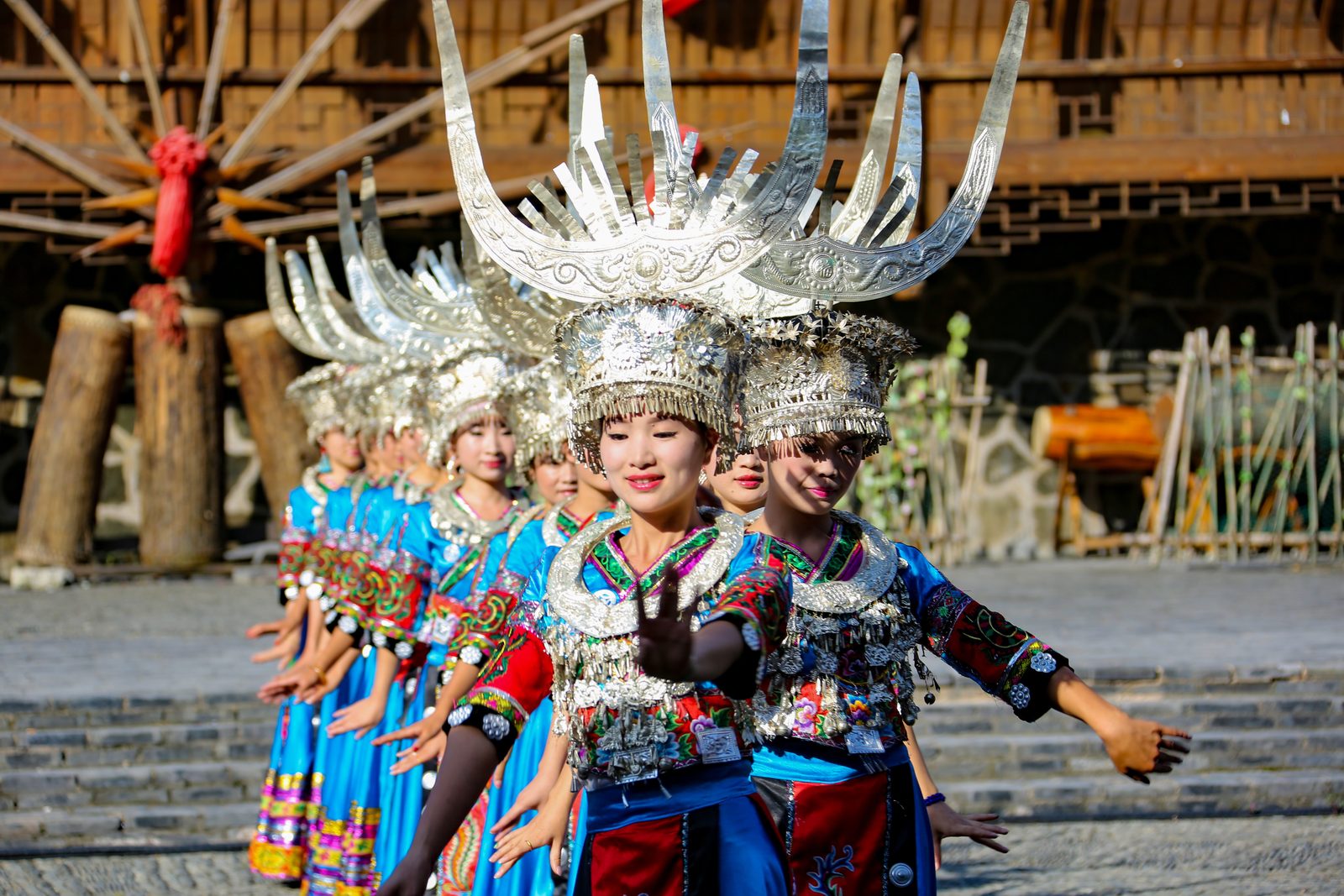
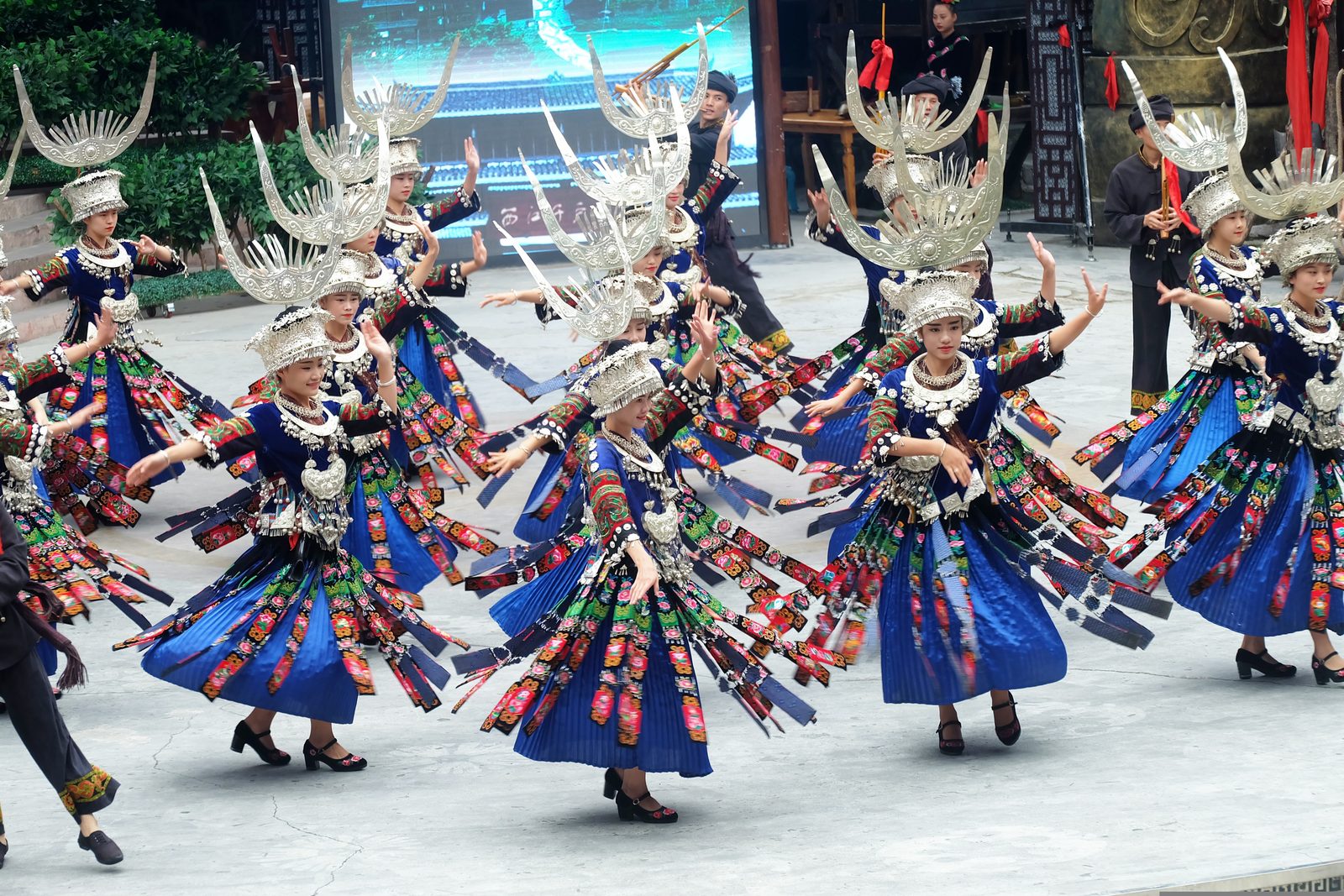
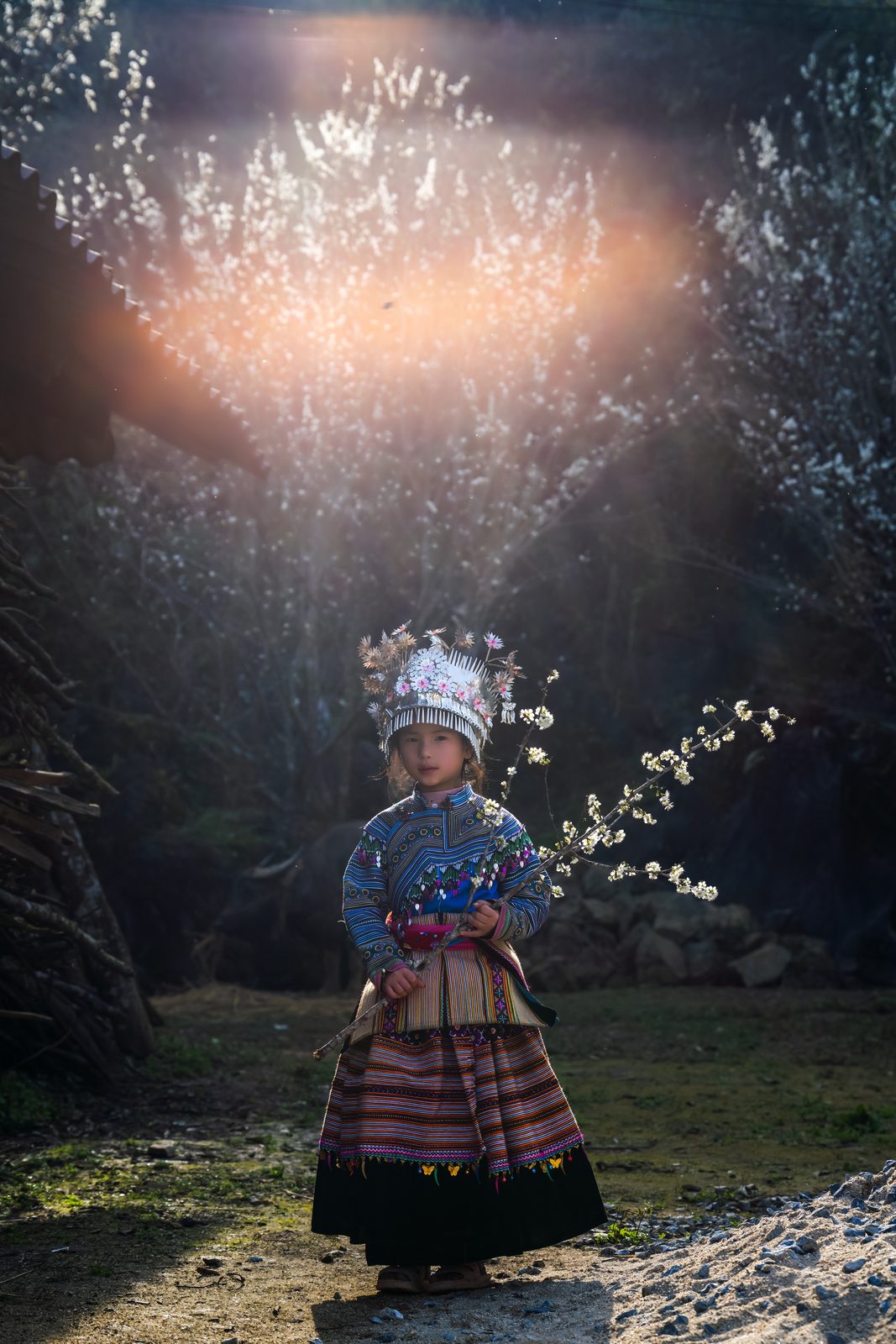
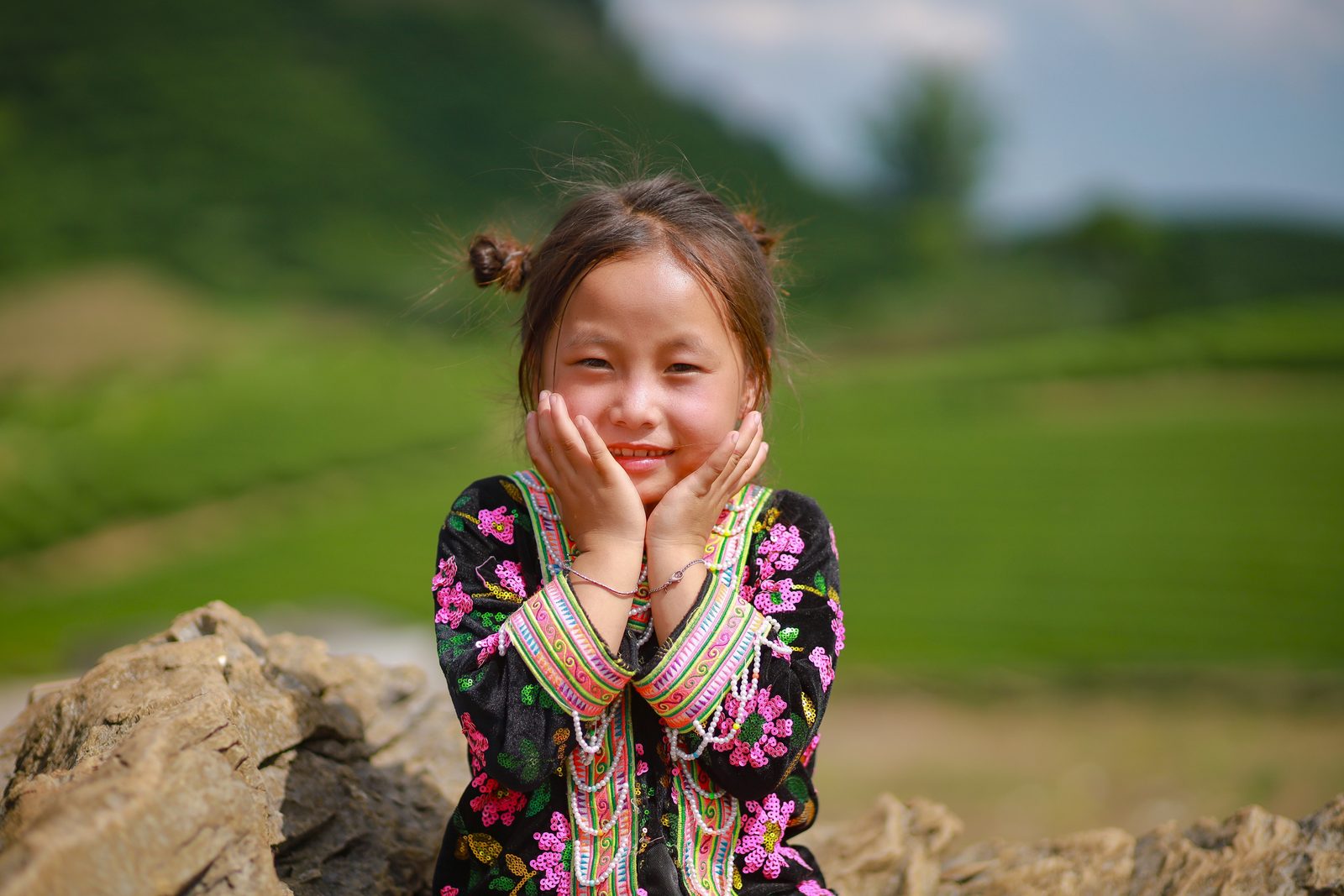
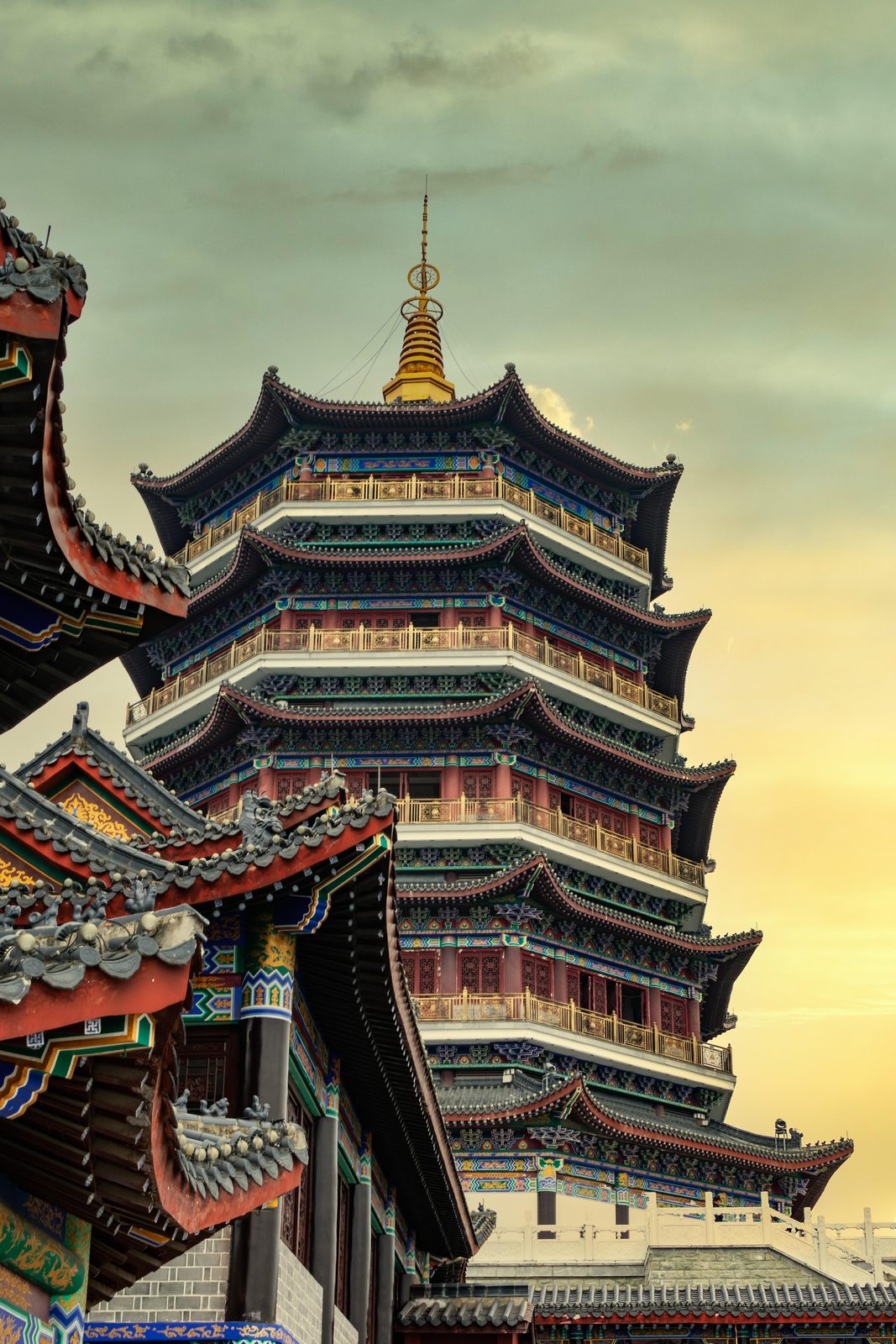
Photography supplied for this project. The waterfall is Huangguoshu; the Miao villages pictured are in southeast Guizhou.
In motion
A regional film on Guizhou's ecology and its ethnic cultures — 1 minute 13 seconds.
Where you stay
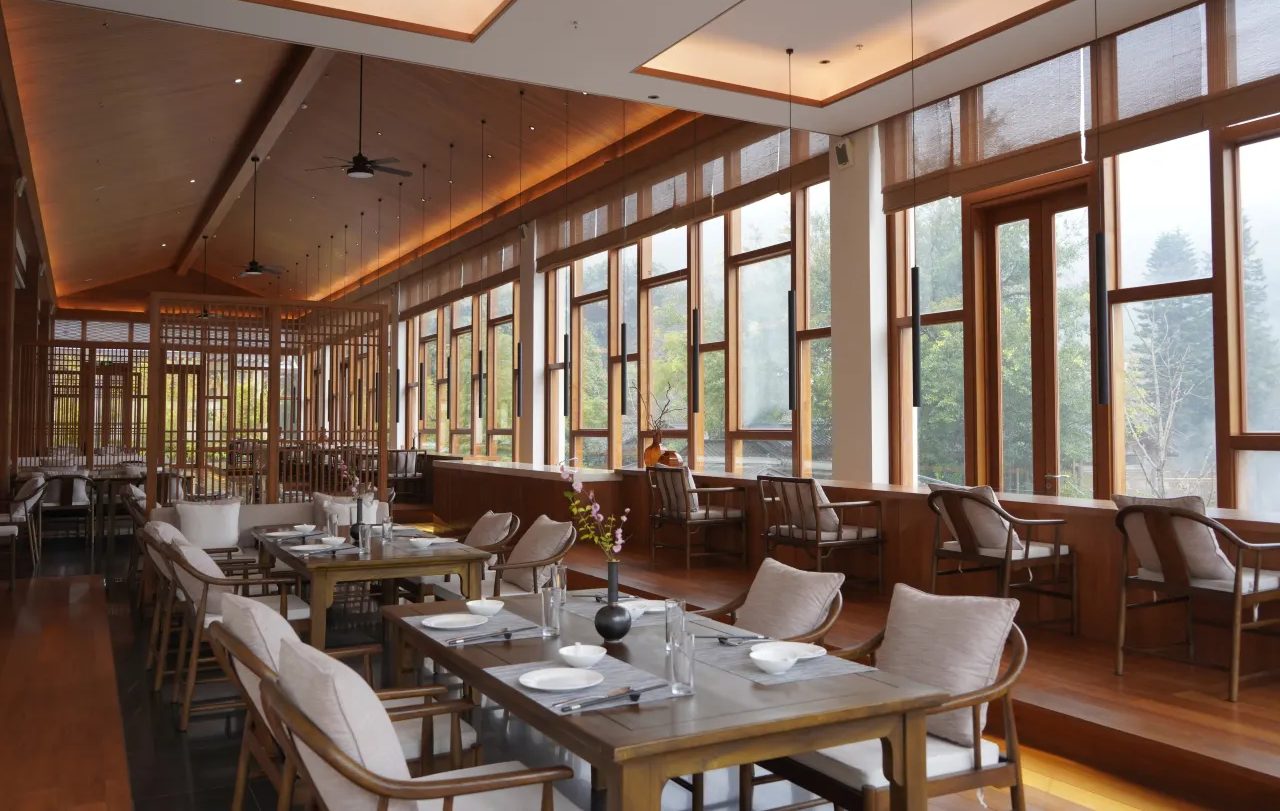
Bolian’s fifth resort is the only high-end resort inside the Huangguoshu scenic area. Its 17 buildings on the north side house 65 rooms, each with a private spring pool on the terrace. The 26 garden pools are arranged around four courtyards. Pu’er tea is available in your room, wax-resist dyeing workshops take place on the lawn, and the shuttle to the waterfall takes about five minutes.
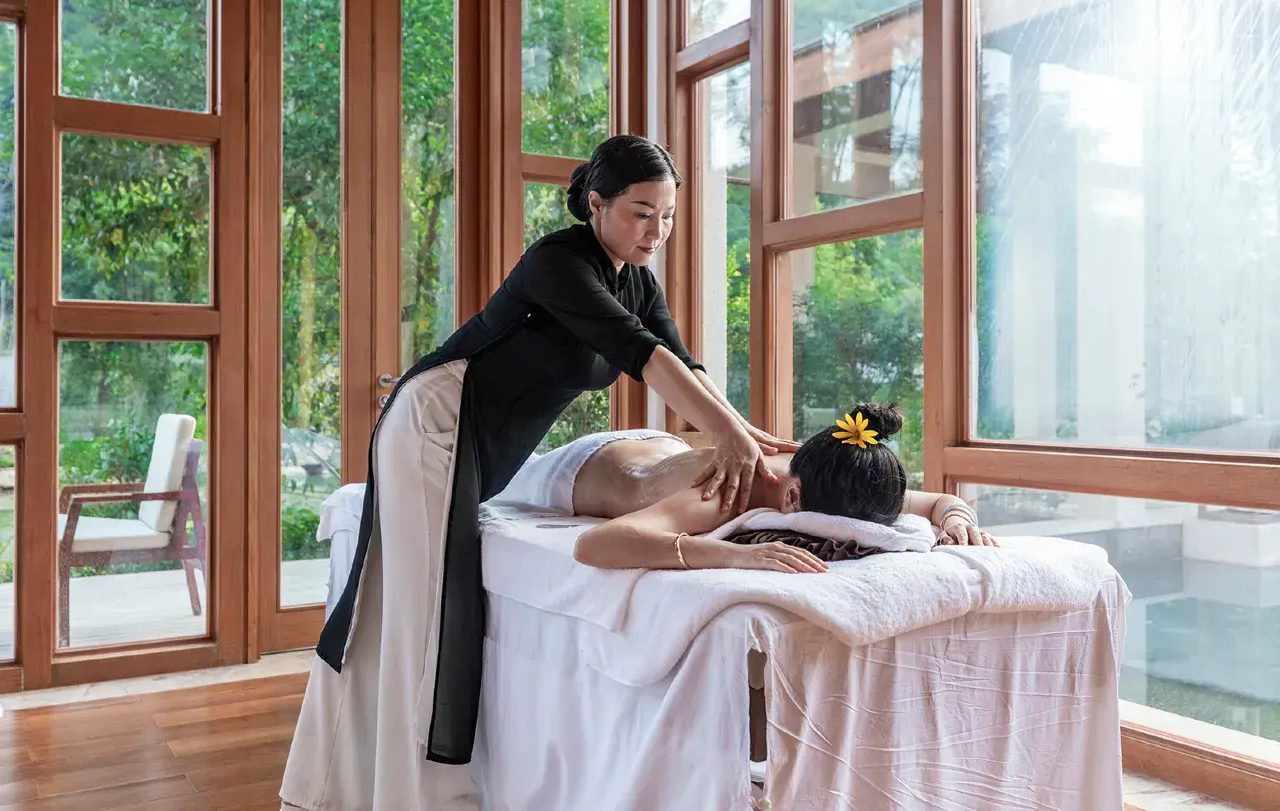
All nine photographs below are courtesy of the hotel.
Highlights
The destination
Huangguoshu, Guizhou: the great waterfall and its Water-Curtain Cave, Tianxingqiao's stone forest, Doupotang, the Dragon Palace cave river, and the Ming-era Tunbao villages of Anshun.
Temperate mountain climate, 1,000 metres up; summer is the wet season and the waterfall is at its fullest.
Visit the hotel website ↗Images courtesy of Bolian Resort & SPA, Huangguoshu. Hotel name and photography are supplied by the owner; written permission is required before public release.
The local tradition
Miao medicine, listed as national intangible cultural heritage, is one of China’s distinctive regional traditions. In Guizhou, it draws on mountain herbs, preparations applied to the body and seasonal routines. Families and the provincial Miao medicine hospital continue to pass it on.
Origins
Miao practitioners worked from what the mountains gave them: nine-steeped herbs, poultices, needling of the surface channels, and a calendar that treats spring and autumn differently. The Tunbao villages south of the waterfall add another layer — Han migrants from the Ming dynasty, still in stone-walled villages, still cooking their own preserved foods.
In your six nights
Get to know the tradition through the batik workshops of Shitouzhai, a meal with mountain herbs and pickles, and morning practice in the garden. Your practitioner also keeps notes on how you sleep and eat. These are ways to explore the culture, not a course of treatment.
These traditions are presented as part of local culture and daily life. Please consult your physician before travelling.
Our local partners
Our Guizhou journeys are shaped with the province's own school of Miao medicine, and with the crafts of the villages around the waterfall.
Known since 2017 as the Guizhou Provincial Miao Medicine Hospital, with Miao medicine as a provincial key clinical discipline. It is the public home of the tradition our resident practitioner practises.
Shitouzhai's wax-resist workshops and Tianlong Tunbao's stone lanes are living craft villages, not staged sets. Our visits are arranged with the households themselves.
Inscribed as national intangible cultural heritage, with external applications, mountain-herb formulas and seasonal regimens recorded across the province's counties.
The organisations introduced here help preserve local traditions. This page describes a cultural wellness experience and does not list medical services. If services from a licensed healthcare provider are arranged, details and a separate agreement will be provided at booking.
Your resident practitioner · Miao medicine
One master stays at the resort for the whole week — reading at arrival, writing each guest a plan, and adjusting it day by day.
He works Miao external applications and surface needling — methods grown in the mountains of Guizhou, carried by families and by the province's own Miao-medicine hospital.
Areas of practice
Our resident practitioner introduces the local wellness tradition. The programme is a cultural experience and does not provide medical treatment. If medical services are arranged with a licensed provider, they are agreed and documented separately at booking.
Practical information
Waterfall and cave-river days use shuttles, lifts and boats; the stone forest is a gentle two-hour walk. Nothing requires hiking fitness, and each day keeps a rest window.
A cultural wellness experience. If you manage a condition, consult your physician first and bring your history and medication list.
1,000 metres up, wet summers, cool evenings year-round. The waterfall is loudest from June to September; spring and autumn are the quietest seasons to walk.
Before you leave, we’ll review the wellness practices you tried, explain which to continue or set aside during your first month at home, and discuss where to find the mountain herbs introduced during the trip.